IDoR 2026: Unlocking Clinical Insights

From Siloed Case to Open Cases Med Library

Many exciting cases from everyday clinical practice are too good to stay siloed in some archive.

Just in time for the International Day of Radiology, we’ve developed a tool that helps you bring cases that are dead and buried in your PACS back to life as interactive examples for teaching and research.

Simply upload your DICOM data to Open Cases Med, add a case description, and your case gets the visibility it truly deserves in the Open Cases Med Library.

Preparing & Editing Radiology Cases – Made Easy

Every day in clinical practice, we come across fascinating cases. But after the diagnosis, most of them end up slumbering in some archive. It would be worth waking these Sleeping Beauties and getting them out of the PACS. After all, behind plain DICOM data, there’s often a patient story waiting to be told – and maybe your next publication.

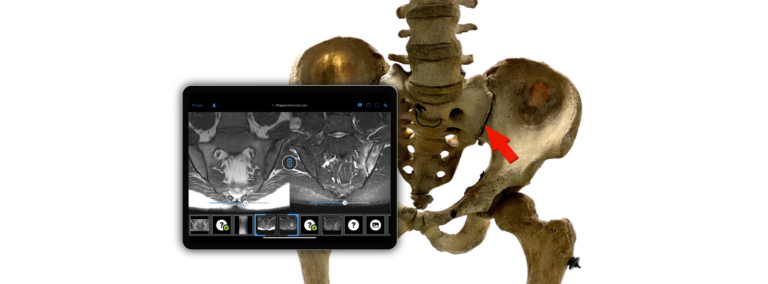
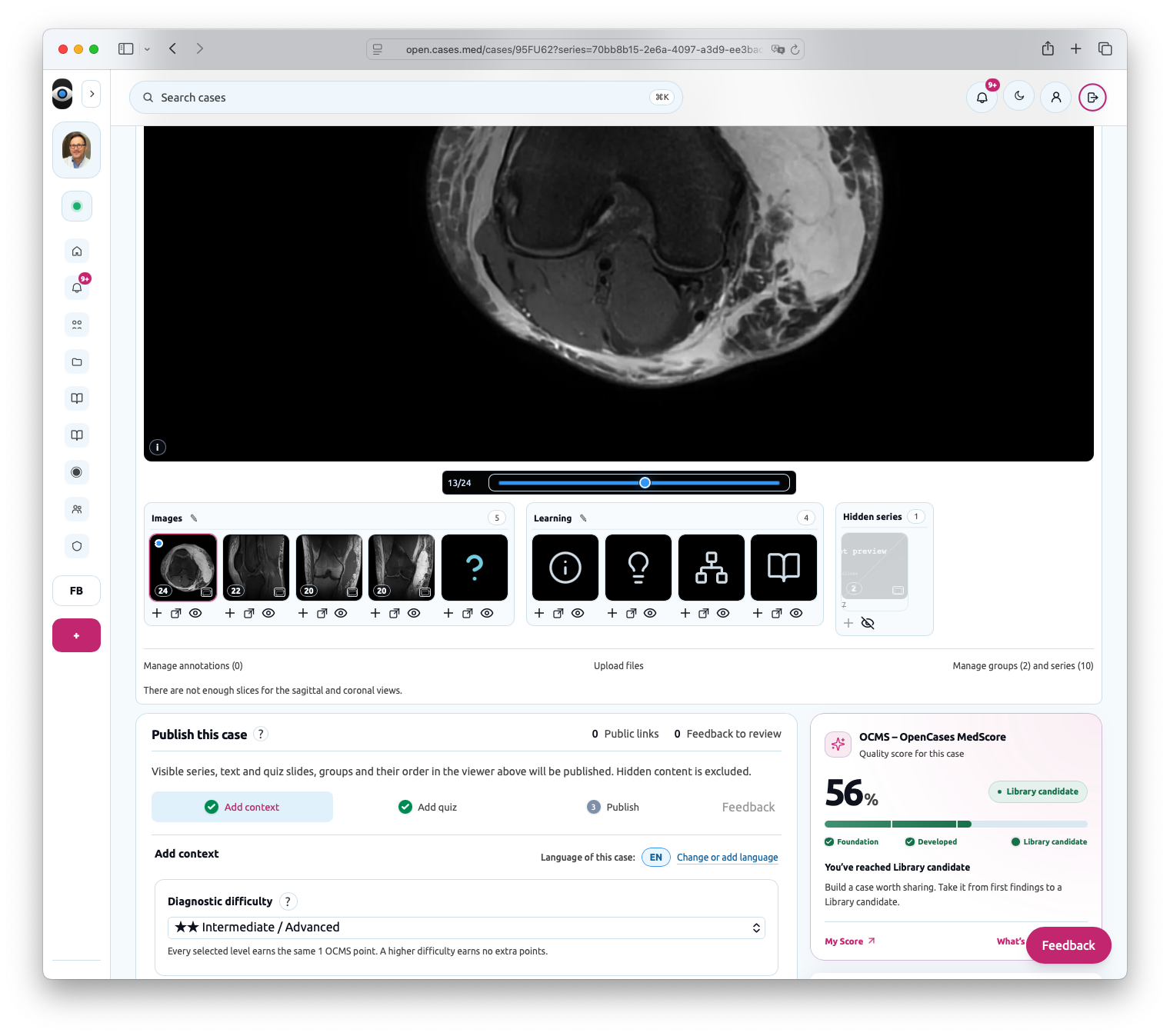
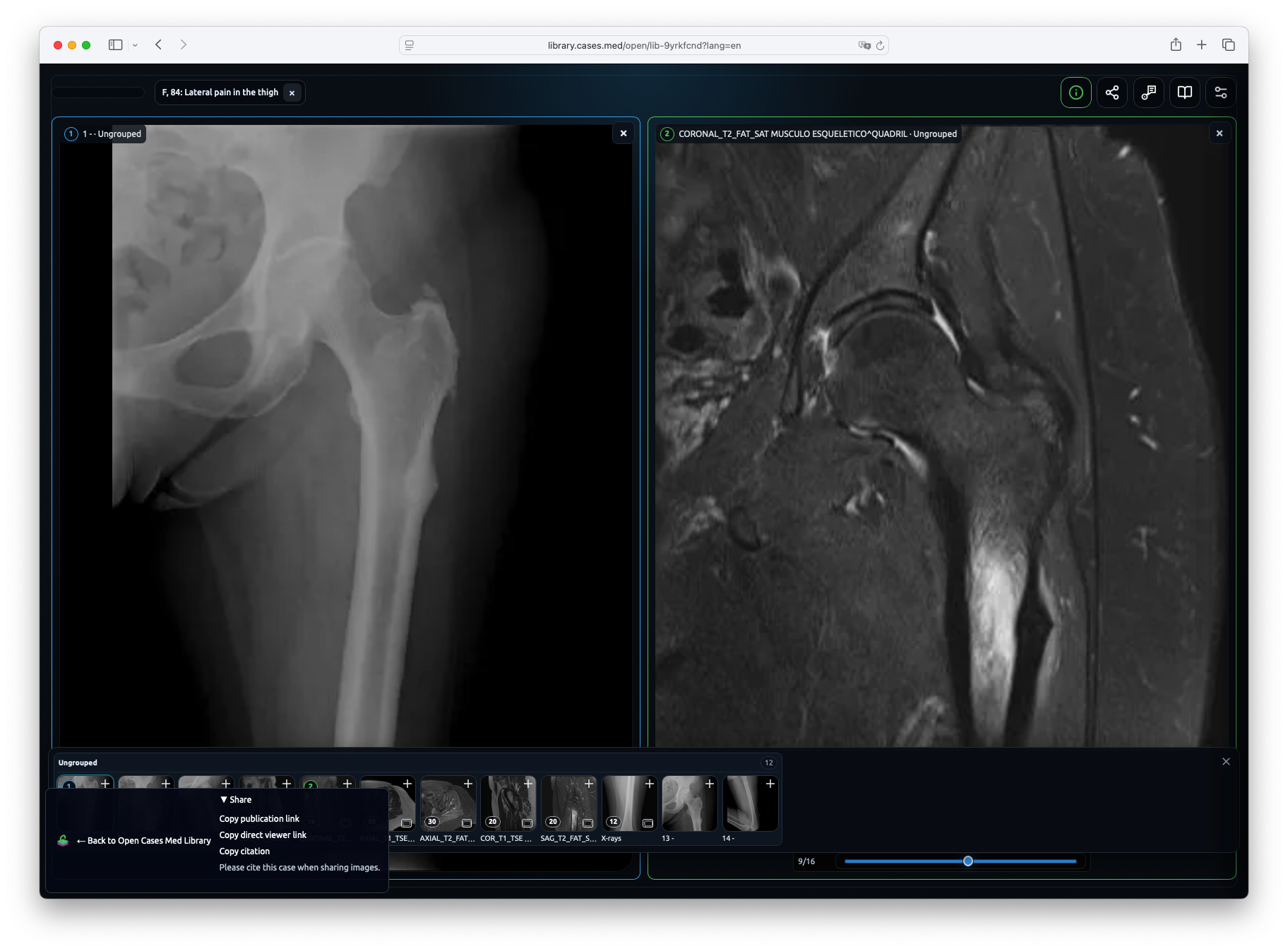
With Open Cases Med, you can easily turn DICOM data into engaging case studies – with de-identification support, full citability, and a DOI (Digital Object Identifier). The tool guides you intuitively through editing, from the medical image to the case description, and leaves room for annotations and in-image markings. The best part? The slices stay intact, so the case can later be scrolled through smoothly in our integrated DICOM viewer.

Sharing Cases – Visibility for Rare Diagnoses. And for You.

Case by Sana Boudabbous, Geneva, Switzerland.

Educators can embed multiple-choice questions directly in the case to transform medical information into an interactive teaching snippet. While you work on your case, the quality index OCMS (Open Cases Med Score) grows right along with it. If you submit the case for peer review at the end, up to 100 points are possible.

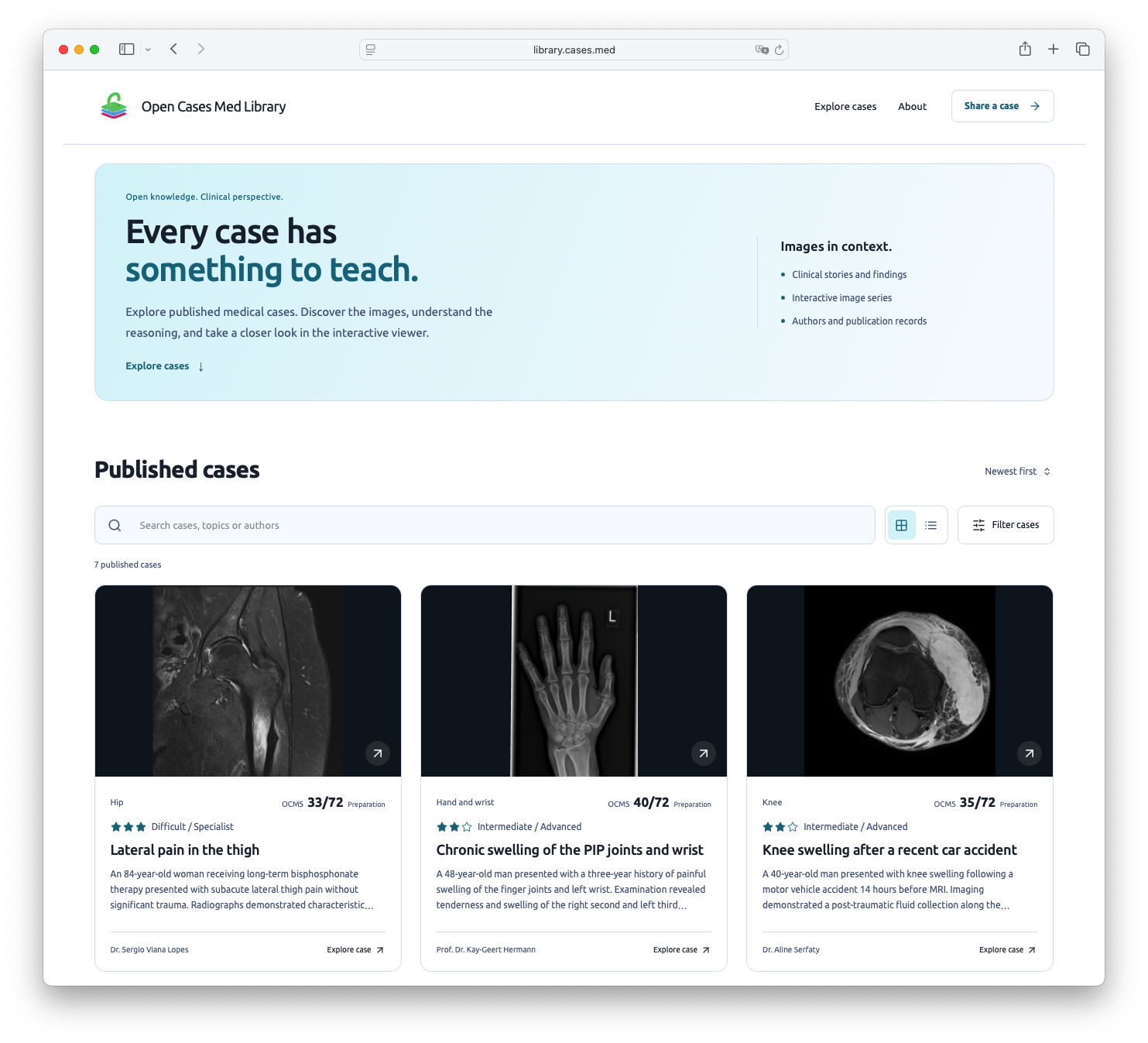
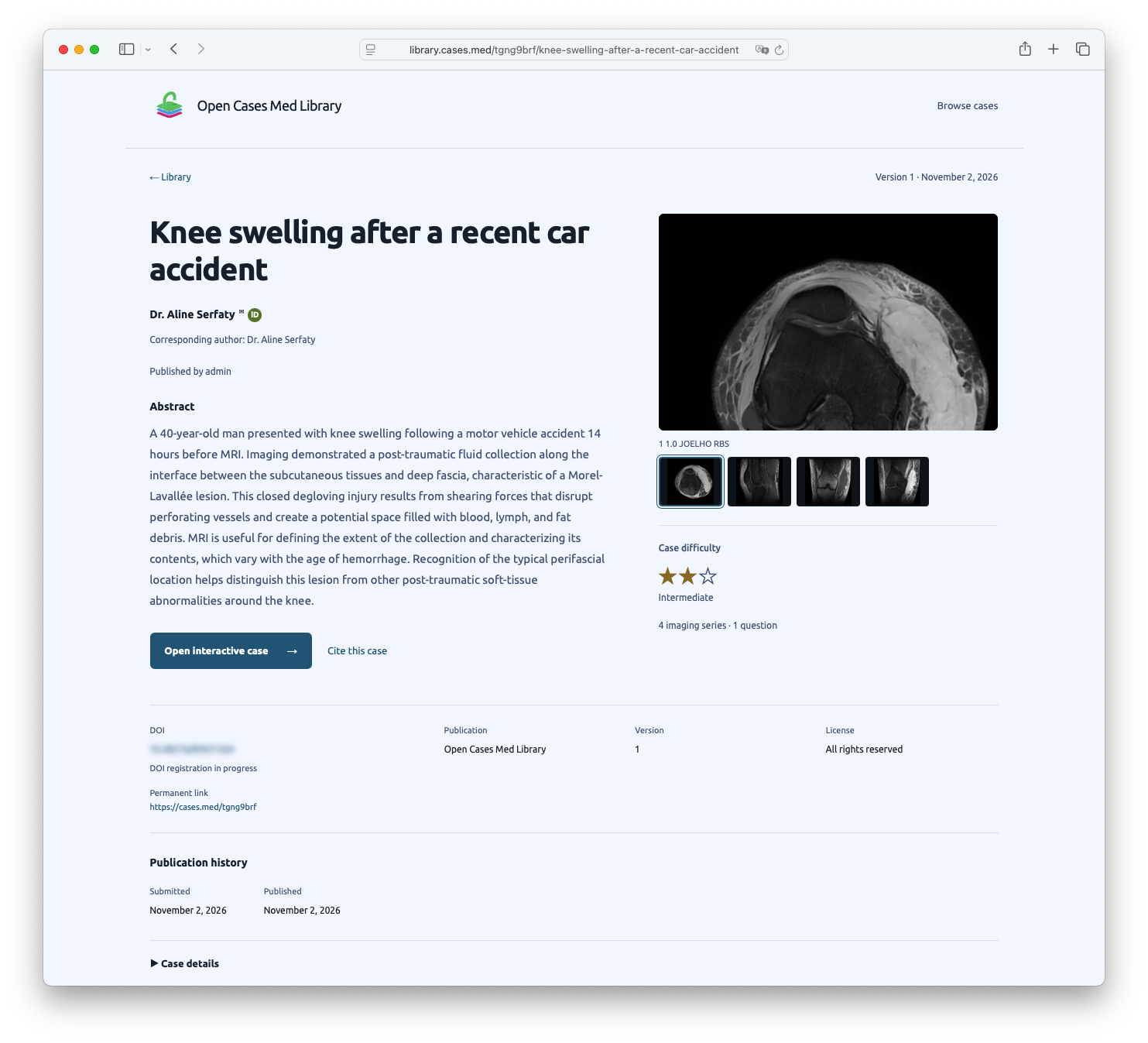
Once published, your case becomes part of our Open Cases Med Library. This freely accessible case collection lets professionals around the world connect and exchange ideas, especially about tricky special cases.

Our goal is to improve the visibility of rare diseases while also providing a well-founded, peer-reviewed basis for standard cases. On November 8, the International Day of Radiology (IDoR) reminds us to take a closer look and bring fascinating cases into the spotlight – and out of the archive. Discover the possibilities of Open Cases Med.

Open Cases Med Library

Upload, Edit, and Share DICOM Cases With the Global Medical Community.

Want to sharpen your professional profile, prepare cases for teaching or research, and contribute your own cases to our Open Cases Med Library? Take the first step and apply for our Contributors Circle. You’ll then receive detailed onboarding to get you started on your Open Cases journey.

How It Works – Polish & Publish Your Cases in 4 Steps

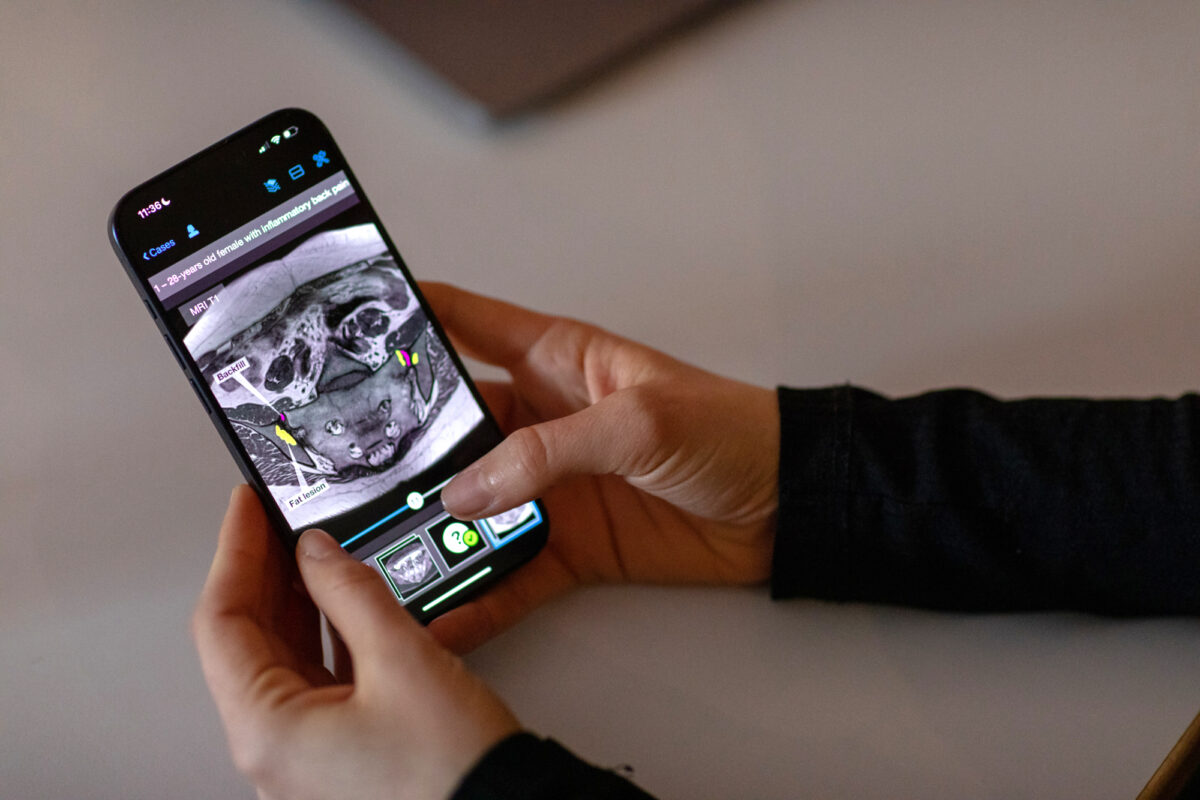
Photo: Rafael Poschmann | Case: Prof. Kay G. Hermann

Why Share Your Cases?

Interactive Over Static:

While static images show only one perspective, a full DICOM series offers many. Turn your edited case into something others can actively learn with, not just look at. Slice-by-slice scrolling, annotations, and in-image highlights let the medical community truly engage with your material.

Academic Recognition:

Every published Open Case is fully citable with its own URL and DOI. Add the DOI to your ORCID profile or any other scientific database to boost your research portfolio.

Maximum Impact, Minimum Effort:

Share valuable clinical insights without the heavy text and formatting overhead of traditional journal paper case reports. Our tool seamlessly guides you through the editing process.

Comparable Quality & Selectable Difficulty:

While editing your case, the Open Cases Med Score (OCMS) tracks your progress. Once your case is published, it serves as an objective index that readers can use to compare case studies’ quality at a glance. Plus, your difficulty rating within our 3-star system helps them find suitable cases in our library.

Easy Data De-Identification:

During upload, our tool helps you protect patient privacy with minimal effort by automatically removing identifying information from the DICOM metadata. Before publishing, please double-check that all images and details are truly anonymized.

Free & Without Ads:

The Open Cases Med Library has no ad banners and no paywall. That makes for a distraction-free learning environment where readers can fully focus both on well-documented standard cases as well as explore diagnostic challenges in detail – scientifically structured, always accessible, and citable.

From Hidden Cases to Shared Knowledge –
With the Open Cases Med Library

Which fascinating case has been languishing in obscurity in the PACS for far too long? Bring it out of the archive with Open Cases Med and become part of our Contributors Circle. We review every contributor request individually. Once you’ve been approved, you can edit, submit, and publish cases. Through peer review, you’ll receive direct feedback from our team of experts.

With the Open Cases Med Library, you’ll increase your personal reach as a medical expert, bring value to the medical community with exciting learning opportunities, and, maybe along the way, put rare diseases that are otherwise underrepresented in research on the open map.

No Cases of Your Own Yet?

Then start by sharpening your eye. The cases in the OCM Library are free to access. You can use them, e.g., in your next presentation or on social media. The only condition: Show the authors some appreciation, because into every Open Case goes a lot of work. Simply click “Copy citation” below the case to get the source reference. And should the space ever be tight, be it on a presentation slide or in an Instagram caption, the primary author’s name and the DOI will do.

Related posts:

Your feedback matters!
Let us know how we’re doing.