Overcoming Procrastination:

Just What the Doctor Ordered

Whether it’s writing the next chapter of your dissertation, finally submitting that overdue paper, or simply wrapping up your daily notes—procrastination can hit any of us. And suddenly that “quick coffee break” or “fast inbox check” turns into an entire afternoon where nothing gets done.

Welcome to the:

Tasse „House of Procrastination“, Design von Clara Gabriel
Welcome to the “House of Procrastination”

When we procrastinate, we lose time on trivial distractions. We look for anything to avoid the real work, or we collapse onto the couch, overwhelmed by an ever-growing to-do list. Meanwhile, the pile of tasks only gets bigger.

But what actually drives this behavior? Why are medical students and physicians especially prone to procrastination—and more importantly: how do you break the cycle? We’ve gathered some helpful strategies, and in true “laughter is the best medicine” fashion, there’s a nice goodie to help you approach the topic with some sense of humor.

How Many People Struggle With Procrastination?

“Why do today what you can put off until tomorrow?” We all know that oddly comforting feeling of setting aside a difficult task to do something easier instead: making coffee, checking emails, or scrolling through social media.

According to a study from the University of Calgary, 80% to 95% of students procrastinate at least occasionally. But some groups are especially prone to it. Procrastination is particularly common among medical students, and for about 20% of people, it becomes chronic, including many physicians.

The Many Faces of Procrastination:
Busyness and Sleepless Nights

Some people still manage to check things off their to-do list. Just never the tasks that actually matter. “I’m really stressed right now,” or “I can’t at the moment; I’m swamped,” becomes a go-to line. 

Others eventually tackle what they’ve been avoiding, but only with superhuman effort and very little sleep. Work-life balance—what’s that?  

And then there are those colleagues who bury themselves in tiny, insignificant tasks. Sometimes that’s because there’s no deadline for the tasks at hand. Sometimes the demands of clinical life feel so overwhelming that procrastination offers a strange kind of breather. Then task avoidance guarantees a much-needed break.

Procrastination: When Putting Things Off Becomes a Burden

The more unfinished work piles up, the heavier the pressure weighs onto the procrastinator. People who repeatedly delay important tasks risk being seen as lazy, unreliable, or even incompetent. It’s unpleasant for everyone involved. For the person affected, though, it can quickly turn into a more serious challenge. Well, a real problem, actually.

Once you’ve entered the “House of Procrastination,” it’s surprisingly difficult to find the exit again. What many people don’t realize: procrastination isn’t a conscious choice or something one could just avoid (like the important tasks). Instead, it’s learned behavior.

The well-meant advice to “just power through” rarely helps. And all-nighters to beat the deadline aren’t a long-term solution, either. However, there are ways to break free from the cycle. There’s just no universal fix, because procrastination, and what it causes—that’s highly individual.

Broken clock symbolizes procrastination
When Procrastination Becomes a Problem

Why Do We Procrastinate in the First Place?

The thing is, when we do things that bring us joy, the body releases dopamine. This neurotransmitter attaches to dopamine receptors, triggering a sense of reward in the mesolimbic system.

Tackling difficult tasks, however, usually doesn’t feel rewarding at all, at least not before we start. So we avoid them. And the more we avoid them, the more we train our brains to rely on avoidance as the default strategy.

You can imagine it like this: in people who tend to procrastinate, a mischievous little circus monkey keeps bouncing between the synapses, doing silly tricks. Center stage for instant gratification! It feels great. That is, for a moment. Then the mood drops just as quickly.

Nice to Know

Task avoidance can bring about real problems. Yet it’s not a medical condition in itself. But chronic procrastination often appears alongside mental health conditions or can increase the risk of developing them, such as depression, anxiety disorders, or ADHD.

Of course, we can’t endlessly sip coffee, refresh our inbox, or scroll through our feed. Eventually our finger (and maybe also the brain) start to hurt, and guilt kicks in: “Why did I waste so much time again? I should’ve started hours ago.”

As the deadline creeps closer and the to-do list grows, the frustration deepens. And then, just before it’s too late, the circus monkey gets shoved aside. Panic takes the stage. Enter the panic monster.

It feeds on stress, and strives on stomach aches, but the panic monster gets things done! It pushes you into a burst of last-minute productivity. And yes, more often than not, the hard work pays off, and you make it just in time. But the constant battle between monkey and monster, plus endless nights, well, that’s exhausting. Who can keep that up?

Still, it happens again and again: we postpone things longer than we’d like, even though we know better.

Illustration: Eisenhower Matrix

How to Overcome Procrastination

Once you understand why you personally procrastinate, you can take more targeted steps to counter it. Sometimes it’s a matter of wrong priorities or simply losing track of what really needs to be done. One helpful tool for sorting tasks by urgency and importance is the Eisenhower Matrix.

It helps create a sensible roadmap. Once established, you could get actually get started. But still something might hold you back. You know, it just takes a tiny step. But knowing that doesn’t help when you just feel paralyzed. Meanwhile, there’s still the circus monkey, already warming up again for another round of juggling. Now whatever you do, don’t get distracted!

Instead redirect your focus. Find something enjoyable about the task. Anything. And start there. Dive right in, especially when it’s about writing. Scribbling away like that can dissolve the blank page phobia that often causes a writing block.

4 More Tips to Break the Procrastination Cycle

1. Organize Your Desk

A messy workspace can sap your focus in seconds. And if you have to clean first before you can start, the risk of “productive procrastination” skyrockets: suddenly you’re “busy” tidying instead of working.

A better approach is to invest in a desk organizer, so every pen, sticky note, and notebook has a home. Or try a clean desk policy, which keeps clutter from piling up in the first place.

2. Boost Productivity With These Strategies

  • Time blocking: Block off specific times in your calendar for certain types of work. Fixed windows for checking emails. Others for writing notes or doing deep work. Don’t forget to schedule breaks!
  • Pomodoro technique: One Pomodoro interval is 30 minutes: consisting of 25 minutes of focused work and a 5-minute break. After 4 intervals, it’s time for a longer break.


Bonus tip:
Focus apps can help you stick to a Pomodoro interval without distraction. For 30 minutes, a tree (Forest) or a bean (Focus Friend) take over your phone screen—and you’d better not interrupt their growth or knitting (yep, the bean does knit)! But a word of caution: these apps don’t actually lock your phone, so expert procrastinators can still doomscroll. If you want to be safe, put the phone away entirely, and invest in a dedicated Pomodoro timer.

3. Work Together

If you’ve tried everything and still feel trapped in the “House of Procrastination,” with the circus monkey acting up and stealing the show, it might be time to team up with other procrastinators. 

One well-known technique is body doubling, often recommended for ADHD. It’s a special kind of co-working: you work in the presence of another person who’s tackling their own tasks at the same time. In person or virtually, it works because of accountability. You commit to doing the work, right here, right now, just like everyone else.

4. Let Go of Perfectionism and Set Mini-Deadlines

And if the work still doesn’t get done? Well, the problem may be your definition of “done.” Perfectionists tend to polish endlessly. But “finished” is enough. Because, just to remind you, “perfect” doesn’t exist anyway. 

The Scrum method, essentially an upgrade to regular co-working, can help here. Important steps are completed in so-called sprints, which can last two weeks or a month. During the sprint, you hold regular meetings to check in with each other, track progress, gather feedback, and see whether the sprint goals still make sense.

A Scrum Master (think of them as a friendly panic monster) oversees the process and keeps everyone accountable.

Conclusion: Procrastination Is No Joke—But Humor Helps

Procrastination can drive us up the wall, no doubt. But hey, when tension is high, humor helps us calm down. Together with Clara Gabriel, a design student from Potsdam, Germany, we created a mug especially for seasoned procrastinators.

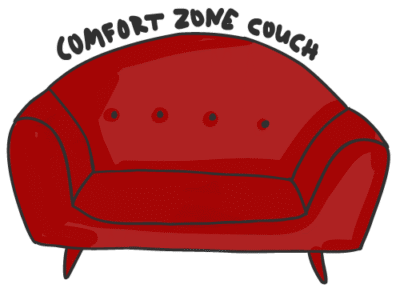
In the “House of Procrastination,” there are plenty of rooms waiting to be explored: the Social Media Staircase leads you straight into the land of reels for endless doomscrolling. The Comfort Zone Couch offers premium, ultra-soft unproductivity. Or take a stroll outside into the Garden of Coffee Breaks, where time simply disappears.

We’re convinced, if procrastination can’t be avoided, and if there’s no escape from a house full of unfinished tasks, we might as well make ourselves feel at home there.

For starters, set up your kitchen for chilling with our “House of Procrastination” mug. It’s perfect for your next coffee break… or two… or three. Then again, you don’t have to grab it from our shelves right away. No, pressure. There’s enough time to buy it tomorrow, or any other day.

“House of Procrastination” Mug

16,00  excl. VAT

Related posts:

Your feedback matters!
Let us know how we’re doing.